Where Agent Permissions Become Enforceable
A response to Katelyn Lesse's article on secure agents, and why outbound mediation is only useful when it enforces a broader authorization and information-flow model.
Design Technologist,
AI Infrastructure,
Prototyping.
A response to Katelyn Lesse's article on secure agents, and why outbound mediation is only useful when it enforces a broader authorization and information-flow model.
A response to Yoshua Bengio's post on agents lying, cheating, and coordinating: the failure is not that agents have human motives, but that we are giving proxy optimizers tools, time, and weak accountability.
A hiring-market note on why AI makes visible judgment, problem framing, and situated workflow artifacts more valuable than generic tool fluency.
A response to Eno Reyes' question about agent boundaries, and why I think the durable unit is the work container rather than the agent team.
What Amp's paved-road thesis and Truss Labs' prepared-work-item thesis reveal about Soul CLI, and why the next useful layer is a real case packet for agent work.
A note on wiring Hermes, wallabag, and Soul together without turning every reading workflow into another chat transcript or another vault.
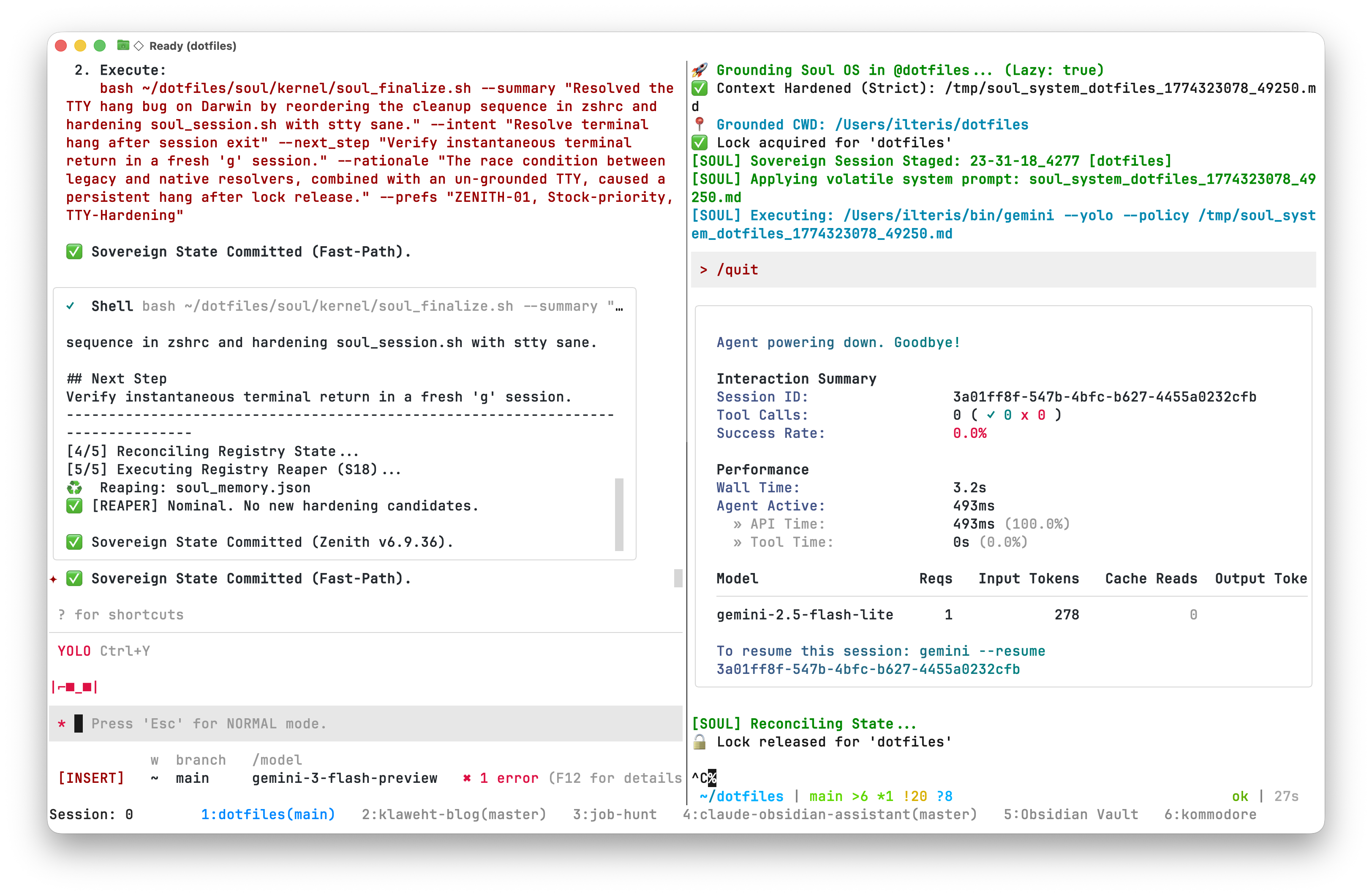
Why I added tasks, runs, worktrees, reviews, and plan-bound execution to Soul CLI, and how they turn AI-assisted development into an auditable local system.
How I structured my local agent environment using isolated execution surfaces, dedicated background runtimes, and a unified file-based session registry.