Actor-Orchestrator: Running Parallel AI Agents with Unix Primitives
This post was drafted with assistance from Gemini to synthesize technical documentation for the Actor-Orchestrator project.
Most people see AI as a chatbot. I see it as a distributed systems problem.
The Actor-Orchestrator is an architecture for managing concurrent, autonomous agent workstreams using gemini-cli and tmux. It moves beyond prompt-response loops into a hierarchical system that can execute complex, long-running tasks with full isolation.
The Philosophy
AI agents should operate like Unix processes: isolated, specialized, and composable. Using the Actor Model pattern, tasks are delegated to isolated workers that operate in their own terminal sessions. This prevents filesystem conflicts, eliminates logical crosstalk, and ensures every contribution is atomic and verifiable.
The Three Layers
- Orchestrator: The top-level coordinator that bootstraps the environment and monitors overall system trajectory.
- Supervisor: The project manager that watches the
.tasks/directory andTODO.md. It delegates tasks via a deterministic dispatch engine. - Workers: The distributed engineers. Each worker handles a specific task: Clone → Branch → Implement → Verify → Commit → Pull Request.
The Worker Protocol
Every worker follows a strict lifecycle:
- Isolation: Each task runs in a dedicated branch (
task-<ID>-<slug>). - Hermetic execution: Workers run in unique temporary workspaces.
- Local verification: No code is committed without automated verification.
- Automated PRs: Pull requests are created via
ghand reported back to the command center.
The Command Center
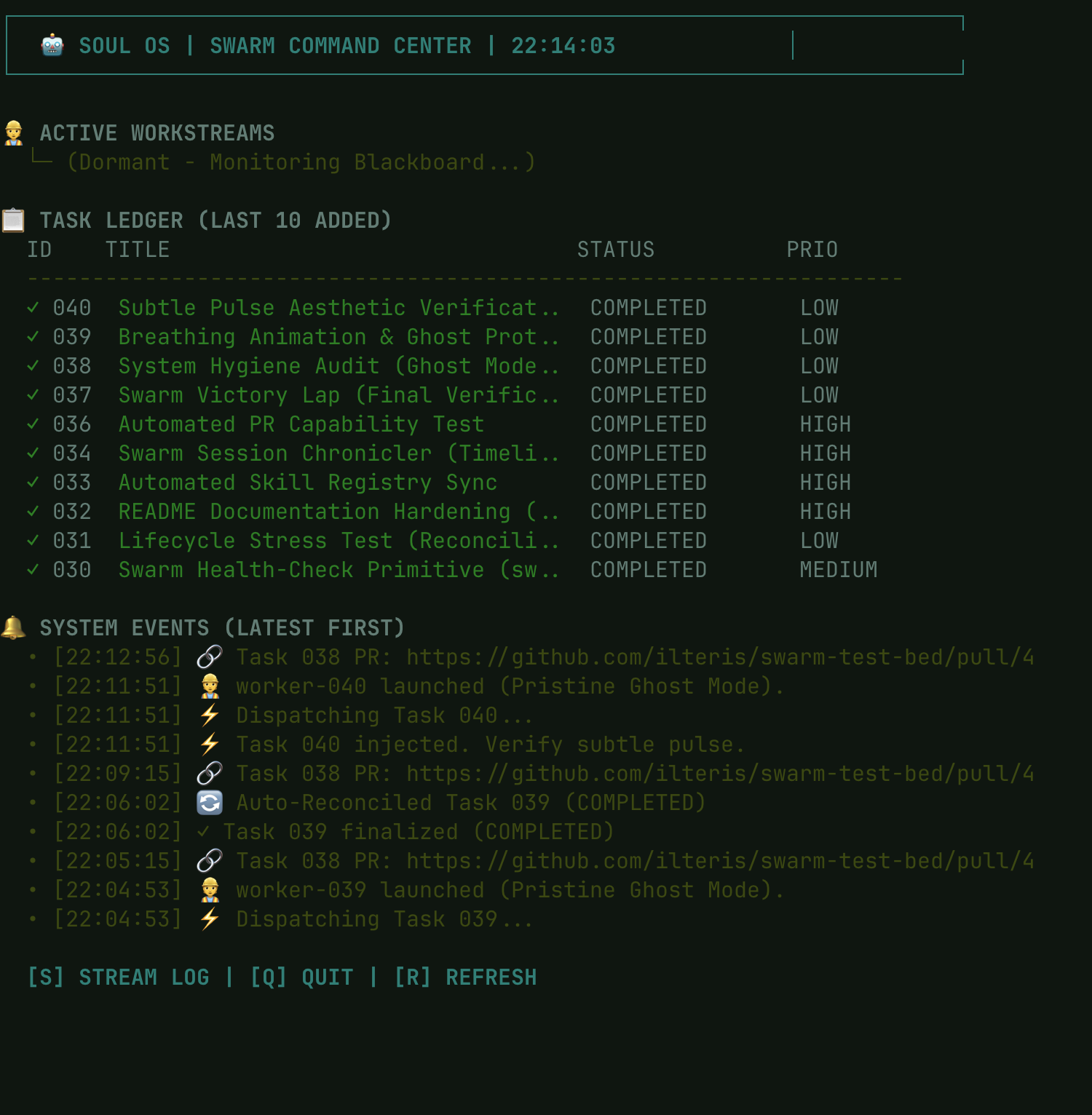
Observability is the bridge between autonomy and trust. The TUI command center provides real-time monitoring:
- Active reasoning: Live previews of worker “thoughts” and heartbeat indicators.
- Task ledger: Sorted history of task states.
- System events: Feed of automated PR detections and infrastructure events.
Why This Matters
By offloading implementation to parallel agents while maintaining strict architectural oversight, you can reach production-ready states in days, not weeks.
Explore the source on GitHub: ilteris/actor-orchestrator