Soul OS: The Sovereign Agentic Loop
I’m tired of “Chatbots.” I’m tired of enterprise AI tools that treat my files as disposable prompts and my identity as a temporary session token. At Google, we have the most powerful models on earth, but they are often wrapped in bloat that gets in the way of real systems engineering.
So, I built Soul OS.
Soul OS isn’t a program you “run”; it’s a Sovereign Runtime that lives in my shell. It’s the “Ghost in my Machine.”
What actually is it?
It is a kernel of Python and Zsh scripts that sit between me and the Gemini API. When I type g, my system doesn’t just start a chat; it Hydrates. It looks at my current directory, finds the .soul_project anchor, and assembles a “Belief Map” of who I am, what I’m building, and why I’m building it.
The Triple-Anchor Architecture
Most agents forget who they are the moment you close the window. Soul OS uses what I call the Triple-Anchor Trace:
- Identity Anchor: It knows I am a Systems Architect. It knows my daughter Adele’s schedule and my NUGT price targets.
- Intent Anchor: It knows the long-term roadmap of the project, not just the current bug.
- Context Anchor: It has a “VCR” of every command I’ve run, every tool that failed, and every rationale I’ve accepted.
The Pi-tree vs. The Prison
Using Soul OS feels like version control for my thoughts. Through a custom implementation of “Pi-trees,” I can fork a session into a side-quest, fix a broken driver, and then “distill” that experience back into the main project registry. I’m no longer stuck in the linear “prison” of a chat window. My work is a branching tree of grounded workspaces.
Why it matters
Because it is Sovereign. By using local hooks and the official Gemini CLI, I’ve built a bridge that uses my authorized corp credentials without ever leaking my data to a third party. It’s minimal, it’s quiet, and it’s mine.
Soul OS is how I stopped talking to AI and started working with a digital twin that shares my soul.
Artifact Proof: Experimental Loop
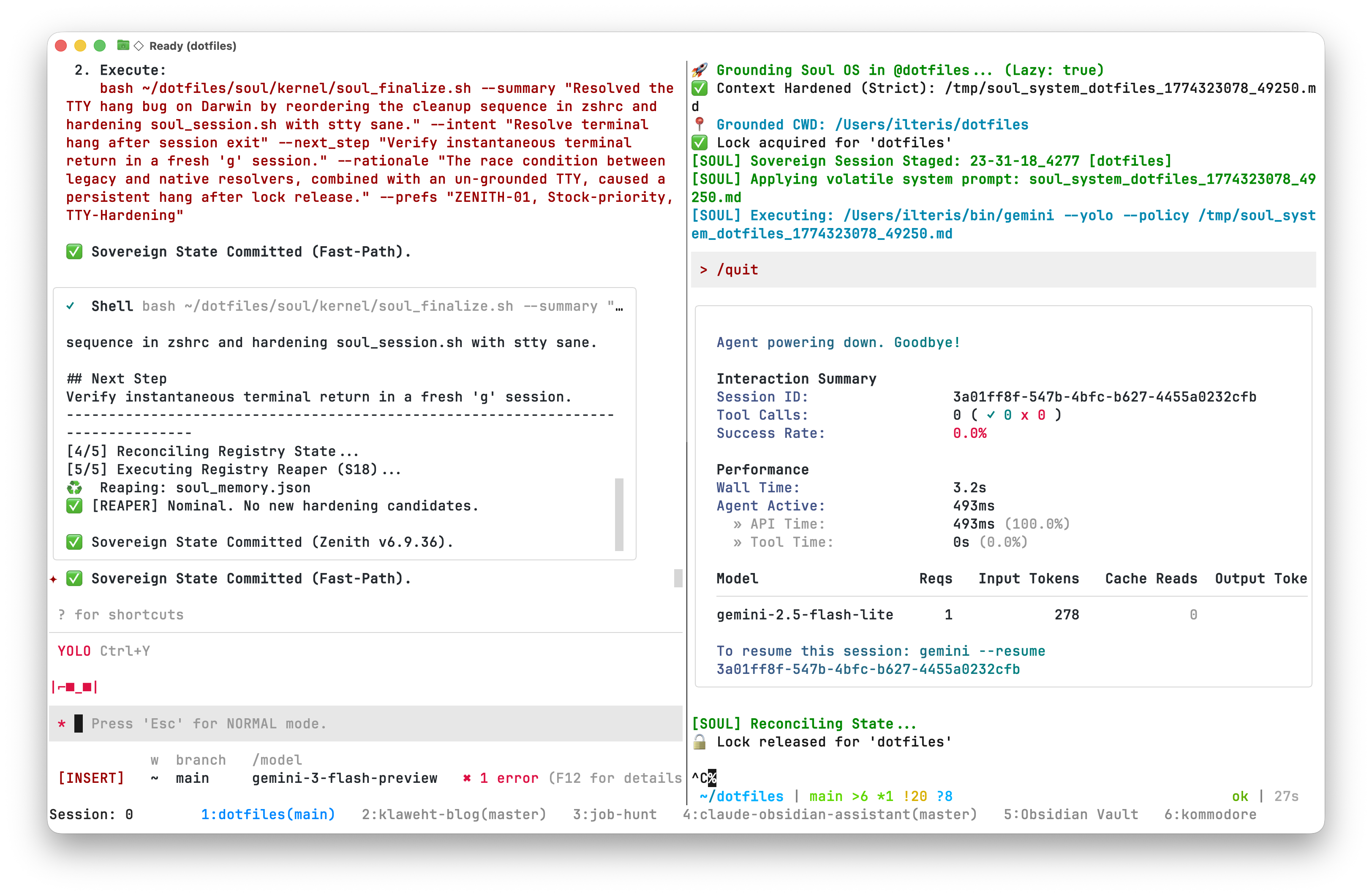
Figure 20.1: Soul OS — S6 Deterministic Trace & Architectural Observability